Abrir janelas à pedrada / Opening windows with stones
Site-specific installation, Serralves Museum, Porto, 2025
Curated by Inês Grosso
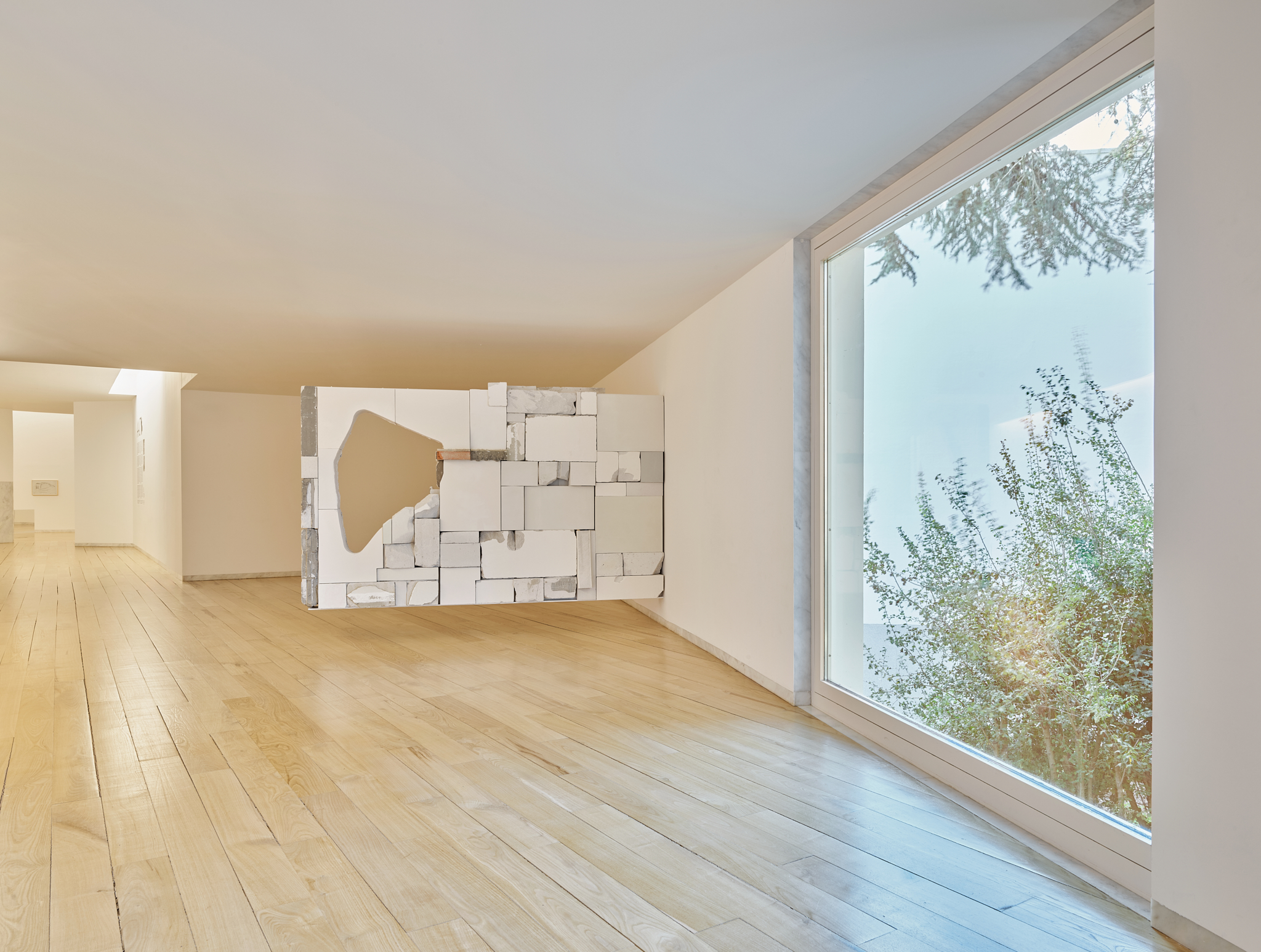
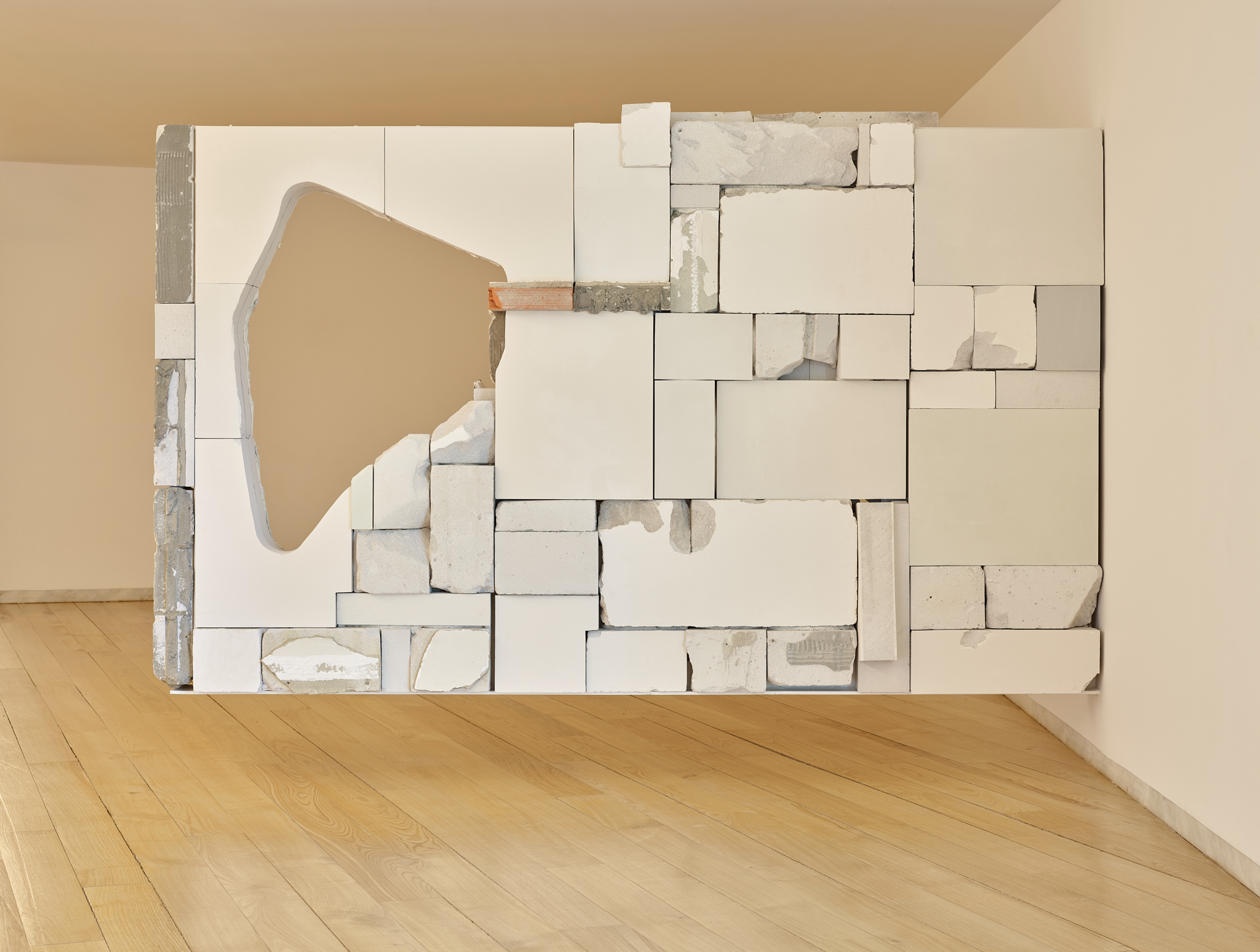
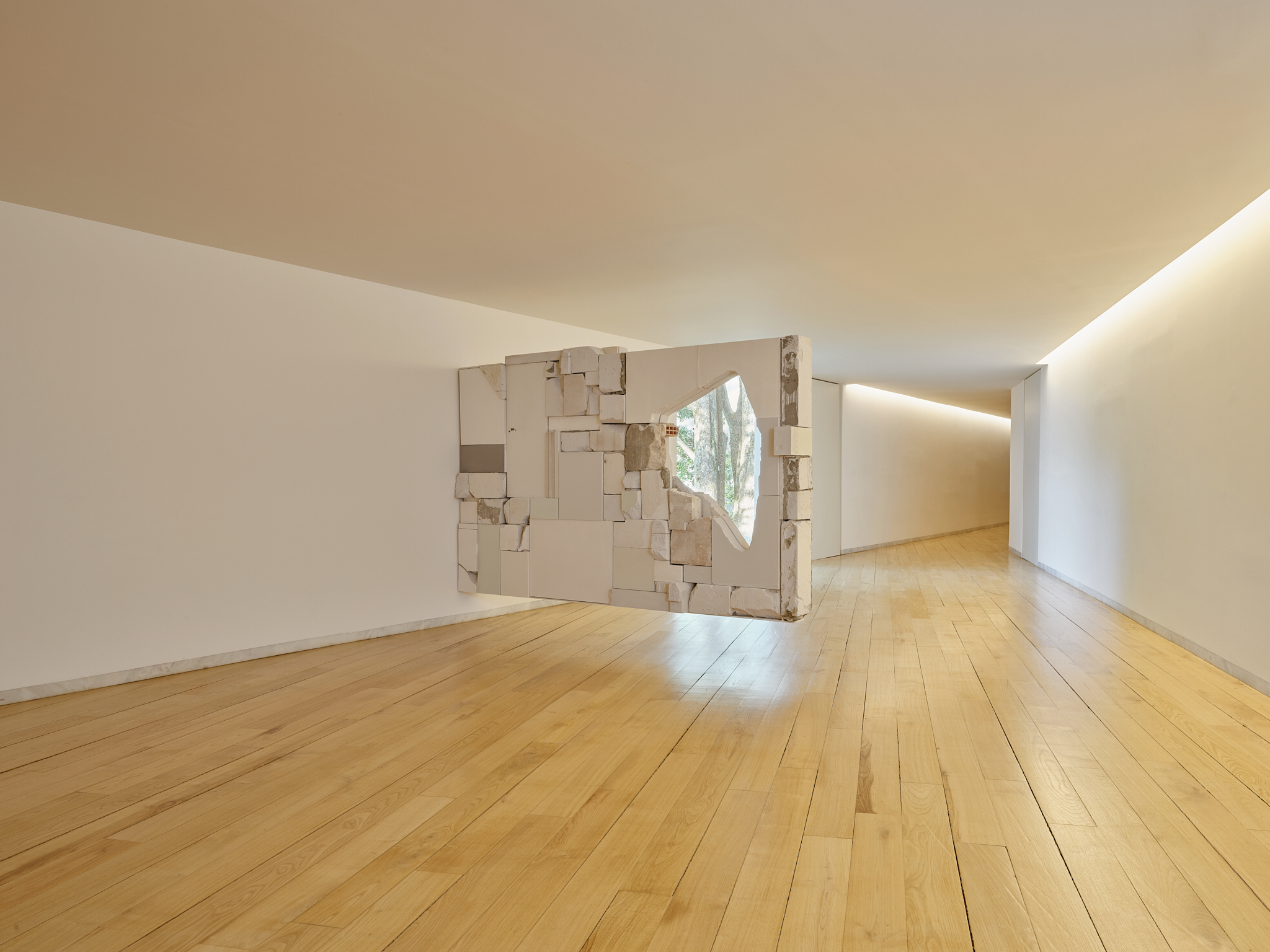
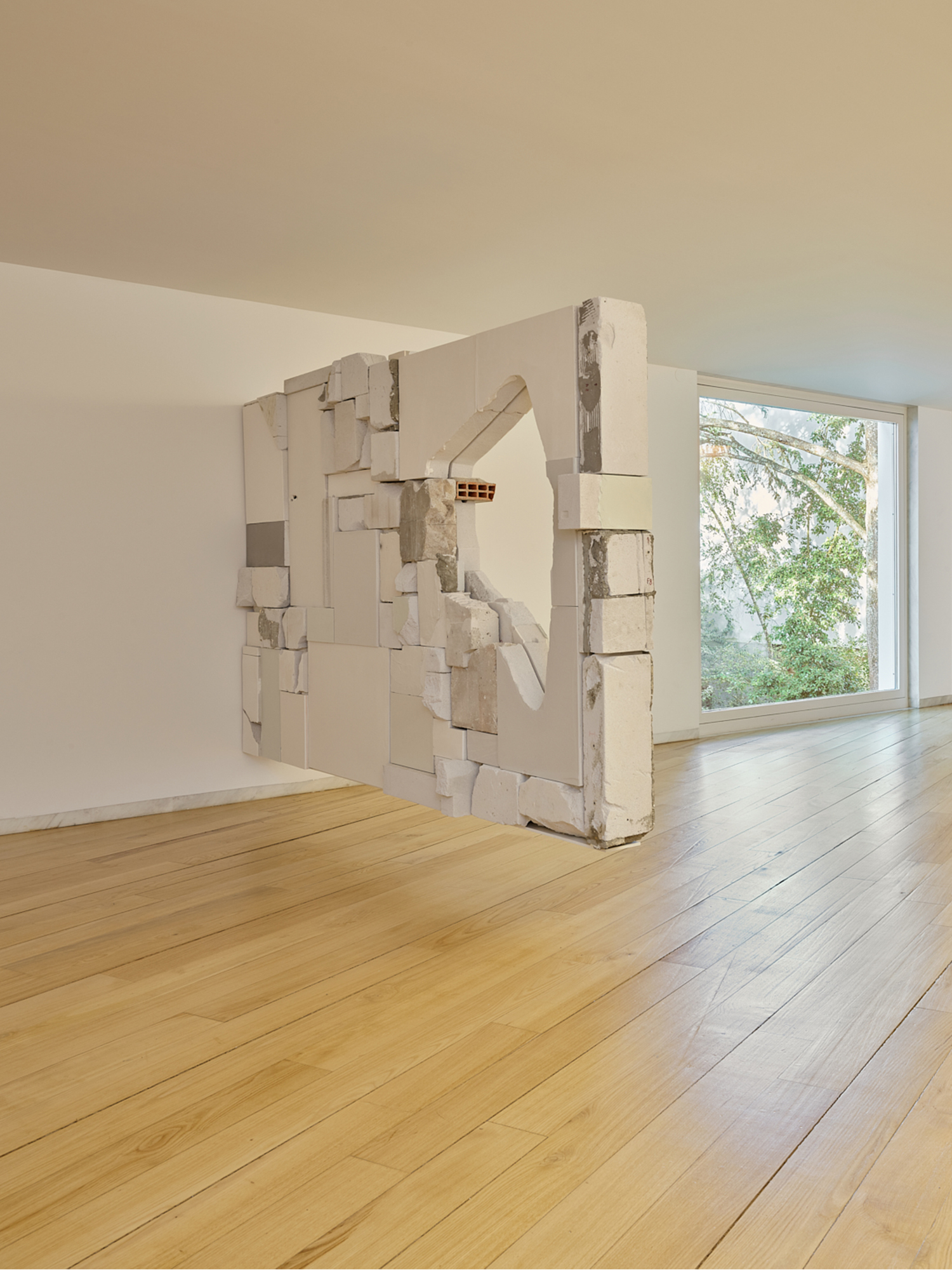
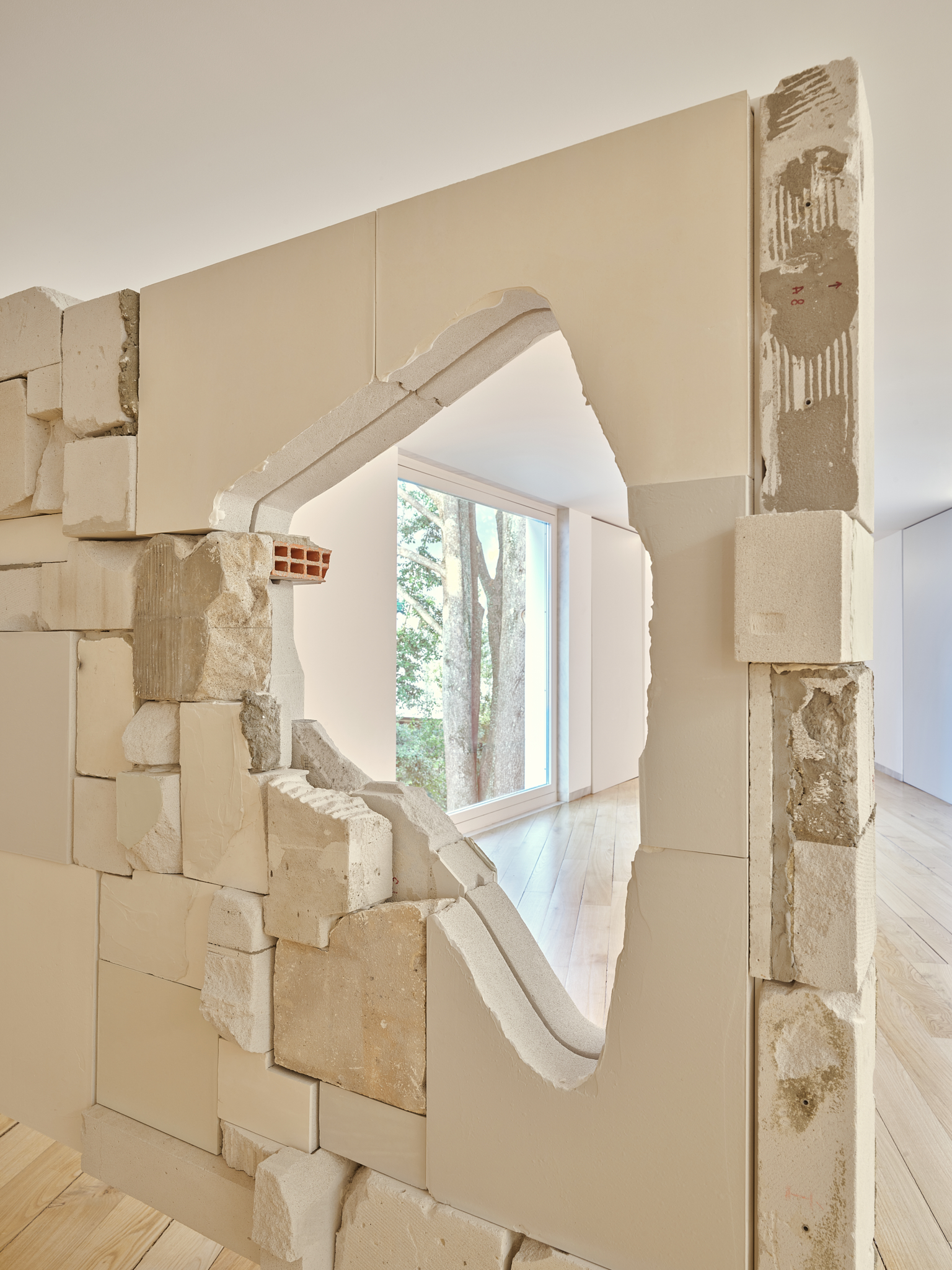
Abrir janelas à pedrada / Opening windows with stones, 2025
Lacquered steel, aerated concrete, stucco, pigment / 331,5 x 180 x 45 cm
Opening windows with stones forms part of the cycle of works commissioned for the bridge that connects the main building of the Serralves Museum to the Álvaro Siza Wing, opened in October 2023. Fragateiro presents a wall of light cement blocks that radically transforms our perception of the space.
Suspended from the inside of the bridge, this irregular and asymmetrical wall appears as a foreign body in the architectural order of the place, establishing a tension between weight and suspension, density and permeability. Built from fragments of buildings demolished in the centre of Lisbon, which the artist had been collecting over several years, the wall stands as a critique of the transformations recently taking place in the city where she lives and works. Fragateiro tells us the story of an urban space subordinated to the demands of a financial logic that is unrelated to the needs of its inhabitants, where each demolition adds a new layer of absence to the palimpsest of the city, leaving marks that highlight the fragility of collective memory and the silent violence of this radical redesign of our cities.
In the long corridor, Opening windows with stones stands as an obstacle: a physical barrier that also carries a symbolic meaning. Without any apparent connection between them, the blocks seem about to crumble, but they mutually support one another, leaving cracks through which the light can pass and our eyes can see. When viewed up close, each stone shows signs of its origin – pieces of plaster, cement, mortar, brick, chipped patches – all testifying to the ongoing process of destruction. The artist does not attempt to reconstruct what has been lost; instead, she organises the fragments into a body which preserves the marks of the destruction that has taken place and shows us the contradictions of the present, questioning how the city manages its own memory. The installation thus functions as a form of archaeological criticism, in which our understanding of the precariousness of the whole is not limited to its formal dimension, causing us instead to reflect on everything that is lost with the disappearance of buildings, be they historical or self-built – the material, but also the stories, the collective practices and the ways of life that are erased by contemporary developments, all undertaken in the name of progress.
-
Inês Grosso
Photos: Filipe Braga